Saturday, November 03, 2007

Feminine Imagery of the Divine


Feminist readers of the scriptures are well aware of the passages in Proverbs 8 which personify Wisdom (GK Sophia, HEB Hokhmah).
These passages affirm that Sophia was there when God made the earth and acted as a partner with God in the creation. This idea fits in well with my conceptualization of the male/female duality of the Divine. The passages can be interpreted as instructions to the earnest seeker to discover and follow the promptings of a Heavenly Mother:


The LORD possessed me in the beginning of his way, before his works of old.
I was set up from everlasting, from the beginning, or ever the earth was.
When there were no depths, I was brought forth;
When there were no fountains abounding with water.
Before the mountains were settled, before the hills was I brought forth:
While as yet he had not made the earth, nor the fields, nor the highest part of the dust of the world.
When he prepared the heavens, I was there:
When he set a compass upon the face of the depth:
When he established the clouds above:
When he strengthened the fountains of the deep:
When he gave to the sea his decree, that the waters should not pass his commandment: When he appointed the foundations of the earth:
Then I was by him, as one brought up with him: and I was daily his delight, rejoicing always before him;
Rejoicing in the habitable part of his earth;
And my delights were with the sons of men.
Now therefore hearken unto me, O ye children:
For blessed are they that keep my ways.

Hear instruction, and be wise, and refuse it not.
Blessed is the man that heareth me, watching daily at my gates, waiting at the posts of my doors.
For whoso findeth me findeth life, and shall obtain favour of the LORD.


In the scriptures, there is additional female imagery which tends to support the existence of a feminine counterpart to God. I hesitate to use them as proof-texts for a Mother in Heaven. These passages can just as well be interpreted to mean that a male Deity has loving and nurturing characteristics. However, if one believes, as I do, that "Elohim" consists of both a Mother and a Father God, the verses that follow add welcome insight into possible roles and characteristics of a Divine Mother Goddess.
One of the early titles for God in the Old Testament is El Shaddai. This word has been translated "Almighty God," or "God of the Mountains." It may have linguistic ties to the word "breast," prompting some to translate El Shaddai as "the breasted One." Though I might not go as far as to use this translation, I enjoy the word play which is typical of Hebrew writing and which connects this title of God to breasts and nurturing. In the language used in Jacob's blessing to his son Joseph in Genesis 49, El Shaddai gives him
"blessings of heaven above, blessings of the deep that lieth under, blessings of the breasts, and of the womb: The blessings of thy father have prevailed above the blessings of my progenitors unto the utmost bound of the hills: they shall be on the head of Joseph, and on the crown of the head of him that was separate from his brethren."


Isaiah uses many feminine images of God in his writings. Consider the following:


The following poem in Hosea 11:1-4 is in the first person, presenting God as a mother who calls, teaches, holds, heals, and feeds her son.

When Israel was a child, I loved him,
And out of Egypt I called My son.
The more I called them, the more they went from me;
They sacrificed to the Baals,
And burned incense to carved images.
Yet it was I who taught Ephraim to walk, I took them up in my arms;
but they did not know that I healed them.
I drew them with gentle cords,
With bands of love,
And I was to them as those who take the yoke from their neck.
I stooped and fed them.

It is possible that Hosea is indirectly presenting God as mother over against the fertility goddess of the Canaanite religion that he is challenging.
Interestingly, Hosea presents God as the husband figure in Hosea chapter 4, and the mother figure in chapter 11. These paired images suggest the male/female duality of God.

Searching for feminine images in the scriptures is a fruitful pursuit. There are many other examples too numerous to list here. I realize that different conclusions can be drawn from the presence of the Divine Feminine in scripture. Some faith traditions have posited that God is genderless, yet "accommodates to human limitations by using physical, relational, gender-laden images for self-disclosure." Others believe that God is solely masculine and patriarchal but possesses qualities that we culturally see as feminine. I present this view as one which aligns with the Proclamation on the Family where it affirms the eternal nature of gender: "All human beings—male and female—are created in the image of God. Each is a beloved spirit son or daughter of heavenly parents, and, as such, each has a divine nature and destiny. Gender is an essential characteristic of individual premortal, mortal, and eternal identity and purpose."

Labels:

Thursday, October 25, 2007

Heavenly Parents in the Scriptures and in our Prayers

Joseph Smith brought the attention of his followers to the plural nature of the Hebrew word "Elohim," which is variously translated in the KJV of the Bible as "God," "gods," and even "angels." It was likely that Joseph wished to promote the idea of a council of gods. But to me, the plural nature of the word Elohim signifies that the God of the Bible is simultaneously both God and Goddess. Some have conjectured that the plural ending for God is used to augment its meaning, rather than to indicate plurality. I believe that the word Elohim both amplifies and multiplies. It is unfortunate that the "-him" ending of the word is confused in the English-speaker's mind with a masculine connotation, rather than the actual Hebrew plural ending "-im."

The word Elohim is a plural formed from the singular 'El (or perhaps 'Eloah) by adding -im to the word. This results in indeterminacy in both number and gender. Elohim is used in the Bible for both male gods and female gods. For example, 1 Kings 11:5 and 33 refer to the "goddesses (elohim) of the Sidonians." An unusual and startling grammatical feature of the word is that it is sometimes used with a plural verb form, in which case it is translated "gods." But other times Elohim is accompanied by a verb in the masculine singular. Translators have become accustomed to rendering Elohim in this case as a singular noun denoting the God of Israel, a singular Deity. However, I advocate the view that this single God consists of a unified male/female aspect. Thus we have verses such as Genesis 1:26: "And Elohim said, Let us make man in our image." I contend that the best explanation for the use of Elohim as the name/title of God is to indicate Divine duality of male and female.

Genesis 1:26 also argues against the conception of Elohim as an all-male, priesthood-holding Council of the Gods. Mankind was made in the image of Elohim, male and female. So this verse speaks either of a Divine Father and Mother, or else a Council consisting of both priests and priestesses.

In LDS theology the Godhead consists of three parts: the Father, the Son, and the Holy Ghost. In my view what we speak of as "the Father" is in reality a Father/Mother God. I do not advocate the idea that the Holy Spirit is the feminine aspect of the Godhead. Having this conception of Deity, I believe that when we pray to God, we are actually praying to both Father and Mother, though convention dictates that we address prayers to a "Father."

One week ago in Church, my eyes flew open when I heard an opening prayer addressed to "Our Heavenly Parents" in Sacrament meeting. I glanced quickly around the room, but no one seemed to notice. It's the third time I've heard a reference to a Heavenly Mother in public prayer in three months (ok, so two of them were at the Sunstone Symposium :)) This interests me in light of an article written by Margaret Toscano and entitled "Is There a Place for Heavenly Mother in Mormon Theology?" Margaret writes of the role that the general Church membership plays in authorizing Church policy. She gives as an example the many conservative Mormon career women who are reshaping the way the Church views women in the workforce.

In Margaret's paper, she concludes that there is no place for Heavenly Mother in Mormon Theology. The weight of Church practice and authority, she says, are against it. But when I sit in a Church service in a villa in this far-off country, and hear a Filipino priesthood holder pray to his Heavenly Parents, I wonder, and hope.

Labels:

Monday, May 07, 2007

The Sacred Union

The religious texts which have been passed down to us through history have the distinction of being patriarchal in their outlook. In the Bible, the Book of Mormon, the Koran, and other sacred writings, we inherit a male perspective, voice, and presence. Many of the symbols, images, and metaphors for the Divine coming from the Old Testament and Book of Mormon involve warfare, the struggle for hierarchy and power, or images of conquering and subduing the land. Salvation through sacraments and by proper authority is stressed. I often wonder what a uniquely feminine mystical theology would look like.

I believe that female mysticism has much to do with relationships. In the Garden of Eden pageant portrayed in the Temple, it is instructive to view the individual encounters of Adam and Eve with the Satan figure. When Satan introduces himself to the man, he comes bearing the fruit of the tree of knowledge of good and evil, and suggests that Adam partake of this fruit. Adam refuses unequivocally. Next, Satan presents himself to the woman with the same offer.

Eve's reaction to Satan is quite different than Adam's. She first wants to know who Satan is. What is his relationship to her? He tells her that he is her brother. She then wonders why a brother would ask her to go against a command of the Father. She is trying to make sense of the relationships involved first, before she will consider the offer.

Interestingly, many of my spiritual strivings involve an imaging of the Divine Feminine and the primordial Sacred Union. I picture "Elohim"--a plural form of the word "God"--to be a sacred union of the male and female Deity. Thus Elohim created male and female in "his" own image. (In many languages, the pronoun "his" expresses both sexes.) I enjoy pondering this relationship as well as the relationship they maintain with their children, humanity.

Reconnection with the divine feminine is essential to our spiritual evolution. However, this must not be done in opposition to the patriarchal father aspect of God. The image of the Sacred Union topples both the notion of extreme female bias in the form of radical feminism, and male dominance with its patriarchal and hierarchical idealogical systems.

In order to reach a more complete knowledge of the Father/Mother God, there must be more freedom allowed to a female imaging of the Divine Feminine. For example, healing is a mystical rite which involves both feminine and masculine. Perhaps the masculine priesthood power provides strength and battles against the infectious elements. The feminine priestesshood is manifest through touch, empathy, discernment, binding. When we eliminate the feminine from our rituals of healing, we lose much. We see a reluctance to touch the body parts involved, and we gradually lose this in our healing, blessing, and temple rituals.

I am interested in hearing modern Mormon reactions to feminine mysticism. Can you see female influences in the symbolism and ritual of the Church? Are you afraid of feminine mysticism? Can you see ways in which the Divine Masculine and Feminine work together in Sacred Union?

Labels: , ,

Thursday, April 12, 2007

The Magical Transforming Female

Did you notice that the names of all the "magical transforming females" in the three films we have discussed were "Mary?" Carol Lynn Pearson sees this as no coincidence, and says that "Mary seems to be the closest name we have to a whole woman." Maria in The Sound of Music represents the maternal aspect of the Divine Feminine. Mary Lennox in The Secret Garden brings out the Creator/Healer aspect. Mary Poppins shows us the mystical, magical side of the Heavenly Mother. Adding these qualities to a motherless family or society can indeed be transforming.

Carol Lynn Pearson sees herself as a player in the great drama of welcoming back the Heavenly Mother to our culture. She has a much more positive outlook on this process than I do. Carol Lynn says that history is on our side, and we can afford to be gracious. She says that although it is not easy for the patriarchy to watch the transformation, we "need to apply our best most charming most beautiful, most inviting selves into the venture. Because a spoonful of sugar helps the medicine go down in a most delightful way."

In my personal struggle with the Patriarchal Church, I haven't found my most charming, beautiful, inviting self to have much of an influence. I find that this charming self is often discounted and easily overruled. One of the questions asked at the end of Carol Lynn's Sunstone session where she presented this talk was, "Whatever is going on between the sexes involves a lot of mystery and chaos. Why does there have to be so much misery between the sexes?" This is one of my questions. As a woman, I see that I am able to be a calming and healing influence most often by capitulating and apologizing. I am not sure this is the best atmosphere for the Divine Feminine to emerge.

How can we move out of Patriarchy toward partnership?

Labels:

Friday, April 06, 2007

Heavenly Mother and Mary Poppins

(Fourth post in the Heavenly Mother series inspired by Carol Lynn Pearson's "Mary Poppins and the Return of God the Mother.")

The Banks family in the film "Mary Poppins" is a very rigid patriarchy. Things are kept shipshape. It’s a man’s world, it's the age of men. Mr. Banks (who works at the bank) is the patriarchal leader of the home. Mrs Banks is not a presence in the household. She is a suffragette, and physically she is gone a great deal. A new nanny is being sought at 17 Cherry Tree Lane. As in the previous films, the children know what is needed. They make an advertisement and it wafts up the chimney like a little prayer. It ascends to heaven and the wind changes. Down from heaven comes the holy magical woman.

Don't worry, readers, Julie Andrews is not really Heavenly Mother in disguise! Perhaps she is a witch. Carol Lynn Pearson tells us that that is what we call any woman who is powerful.


I have known members of the patriarchy to react in fear toward a strong woman. I often wonder if it is fear which motivates the suppression of Heavenly Mother and those who seek to know more about her.

Mary Poppins becomes the new nanny and takes over the household. Carol Lynn notes that from her handbag come things that are rich in symbolism. In her talk she says she has no time to discuss these in detail. This piques my curiosity. It's been a while since I saw "Mary Poppins." Does anyone know what came out of the purse? I'd love to discuss the symbolism of these objects.

Dick Van Dyke is the masculine counterpart to the patriarchy. We have lots of men like him. He is a delight. He is free, extrovertive, uninhibited, supportive. Perhaps he is a bit irresponsible. You will notice that "Bert" is not an overly masculine character. He sings, he dances, he floats in the air. Carol Lynn tells us that our society is out of balance in the masculinity department. She quotes Alan Alda saying that we are suffering from "testosterone poisoning."

Mary Poppins brings warmth, joy, and fun into the Banks family. If feminism is not more fun than patriarchy, Carol Lynn submits, why bother? Mary's activities are noticed. Mr. Banks is not pleased. The female brain produces more cooperation than competition. This is just what the household needs, but patriarchy is losing control. Here is this person with chaos in her wake. Chaos theory is a necessary next step to a different higher order. Mr. Banks calls it moral disintegration. When Michael wants to give his tuppence to the birds and not invest it, Mr. Banks is furious. Bert says, "Your father is a fine gentleman. There he is in a cold bank, I don’t like to see anything caged up." Carol Lynn points out that patriarchy has put a lot of men in cages.

Mary Poppins asks the children, "Do you think father needs our help?" This is the final step in the transformation of the patriarchy in the Banks home. The children come in and give love to him as they can. Our patriarchy is shaken. Carol Lynn advocates this as an important step in revolutionizing the patriarchal system of things. She explains, "I am not saying no marches, no civil disobedience or whatever is your style, but let us not forget the simple gesture of love is important."

Thus it comes to pass that Mr. Banks offends the sour dour patriarchy in all of their extreme. He is cast out, he is excommunicated. He has nothing to say to their reprimands--except “supercalifragilisticexpialidocious.” He sings and dances his way out of the bank. He has given himself over to a new teacher. The wind has come around. Seeing the transformation in the family, Mary has finished her work and ascends.

I am especially interested in the reactions of my readers to the idea of the patriarchy's fear of a strong woman. Are any of you men uncomfortable identifying with the characters of Dicken in "The Secret Garden" and Bert in "Mary Poppins?" Do you feel uncomfortable with a man choosing a supportive and building role to a strong woman's vision?

*Yet to come--Carol Lynn Pearson's questions and conclusions on the subject of the Divine Feminine.

Labels:

Wednesday, April 04, 2007

Heavenly Mother and The Secret Garden

The Secret Garden was one of my favorite books as a little girl, and I read it to my own girls when I grew up. Carol Lynn Pearson says she first recognized this story as an allegory of the Heavenly Mother when she saw the play on Broadway. Again we have a home that is motherless. Archibald Craven has lost his wife and is desolate. He will not see people, and he leaves his house and his young son every spring because it reminds him of his lost love. Carol Lynn identifies this as the kind of grief the kabbalah reminds us that God is in without the Shekinah. The curtains are closed. Mother nature is banished from the home. A picture of the mother is draped and hidden from view.

An interesting aspect of this home is another female figure, the housekeeper Medlock. She is a woman who is invested in supporting the status quo.

Into this sad patriarchal household comes Mary Lennox, a 10-year-old whose mother was the twin sister of Archibald's wife. She is a troublemaker. She turns the household upside down. Mary laments that the house seemed dead, it seemed like a spell had been cast upon it. She goes into the mother’s room that had been locked and she finds a key. "There are keys you are not supposed to mess around with," says Carol Lynn.

There are some other similarities that Carol Lynn didn't mention that I'd like to bring out. In the Church we have made the Divine Female so sacred that she is to all intents and purposes a "secret." Like any family secret, we all know she is there, but we are told not to discuss her, not to pray to her, not to seek her.

Mary discovers the mother’s private beautiful garden. No one has been in it for ten years. She uses her stolen key which opens the door. I find this remarkably analogous to the knowledge that we have a Heavenly Mother which was brought to us through the lovely song "O My Father" written by Eliza R. Snow. Her words speak of "the key of knowledge" which restores to us our knowledge that we "have a Mother there."

In the secret garden, Mary sees one shoot growing. Carol Lynn says, "I looked around and saw the concept of the divine mother dead except for a little shoot here and there. Maybe it’s not completely dead. In my heart, the feminine has not been buried, it has been planted, and it is growing and greening."

Carol Lynn describes how Mary makes friends with Dicken and they tend the garden. Boys have their role to play in these dramas, as we will see when we discuss the next film. Colin comes to life. “Maybe I’m not ill,” he says. A prayer circle is held by the children to call the father back. He hears, and returns home. He finds the son is not in his bed. The portrait is unveiled, light is coming into the room. Medlock says the girl has caused havoc. A girl is out of control, what are we going to do? The father says to Mary, “you brought us back to life. You did something I thought no one could do.”

Carol Lynn's concluding remarks to this story show great enthusiasm. "What a day it will be when our patriarchy looks at the garden we have brought to bloom and they say thank you for making the mother’s garden grow. We will never close it up again," she exults. I wonder how Carol Lynn would feel about this statement today. In the '80's and '90's I too felt that the knowledge of a female counterpart to God was growing and becoming more important in the lives of Latter-day Saints. In my lifetime I have seen this excitement quashed, the key taken, and the garden locked up again.

Labels: ,

Monday, April 02, 2007

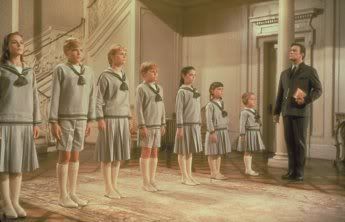
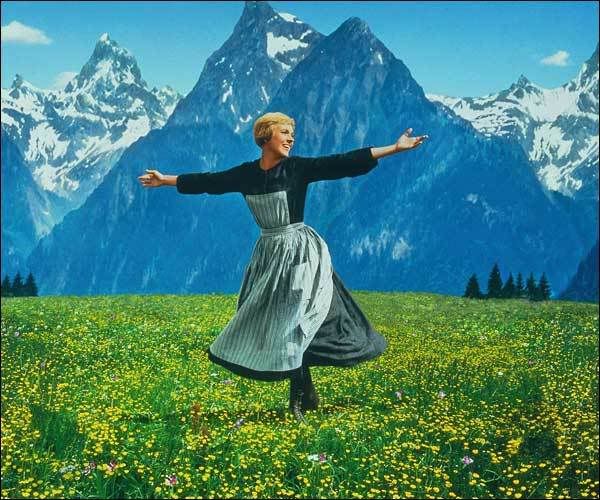
Heavenly Mother and the Sound of Music

In her 1998 talk previously referenced, Carol Lynn Pearson compares several well-known movies to the problem of Heavenly Mother in the LDS Church. She states that people everywhere have a universal longing to know of the Divine Female, and this is reflected in popular culture. In passing, she mentions "Peter Pan"--who "needs a mother so bad that he goes out and steals one!" But the first movie she really analyzes in her talk is "The Sound of Music."


Carol Lynn describes the setting of this film as a sad, militaristic patriarchal household. Discipline is the order of the day, imposed by the “Captain.” Titles and the military are important in patriarchal thought, Carol Lynn observes. Into this situation comes the magical woman. Down from the hills, the holy woman, right out of the convent. She is a troublemaker. The captain is not pleased. She brings a female presence into the household. She sings of very feminine things. She works her magic with the children. The children sing the song that Maria taught them, and Captain is amazed “You brought music back into the house. I'd forgotten. Please stay.” To this Carol Lynn comments, "What a day it will be when our patriarchy says, 'You’ve brought the feminine back into the house, I’d forgotten, please stay.'" In her recounting of this story, Carol Lynn seems to see Maria as symbolic of both the Heavenly Mother and symbolic of those in the Church who work to see her recognized as a valid and vital reality in Mormon theology. These women (and men, sometimes) are troublemakers. Their goal is to bring the Divine Feminine to the forefront, where the entire Church can feel her effect upon them.

Soon the Spirit of the Feminine is banished from the Von Trapp household. Her loss is sorely felt. The children go to the abbey to get her back. Says Carol Lynn: "Children should not be passive when they need their mother back. I have a right to knock on any door and demand my mother back." I am continually surprised and delighted to observe how Carol Lynn gets away with saying things like this. Many others have been disciplined for less. I know I'd never be able to get away with a statement like that. Readers, what do you think protects Carol Lynn from the watchful eye of the patriarchy? Is it a good relationship with local leadership? Is it her admired public persona?


At the conclusion of "The Sound of Music" the organ plays a wedding melody, which segues into “how do you solve a problem like Maria?" We now know that instead of being the problem, Maria is the answer. Carol Lynn asks her audience: "How do you solve a problem like Lavina? Or Janice? You love them, allow them, support them-- helping to transform the patriarchal household into a partnership." I often wonder how this could have been done. How could Lavina's and Janice's and Margaret's ideas been integrated and supported and loved by a patriarchal leadership? What a fascinating era it would be to even today have the voices of these intelligent spiritual women heard in the mainstream Church. Having rubbed shoulders for a small time with each of them, I recognize their strivings to have the Spirit guide their lives and their teachings as much as the majority of male leaders I have encountered.

As the film ends, the "fatherland" calls, but the Captain has now been enlightened. He recognizes the value and power of a combined male/female unit. He has greater resources, and with the help of the Holy Woman, he and his family climb the mountain to freedom. Carol Lynn ends her exposition on this film with these words: "I invite the patriarchy to fall in love with me and I promise to be a devoted and useful partner."

(Succeeding posts will address Carol Lynn's thoughts on "The Secret Garden" and "Mary Poppins.")

Labels: ,

Wednesday, March 28, 2007

Life in a Motherless House

This week I received my tape of Carol Lynn Pearson's talk, "Mary Poppins and the Return of God the Mother" from the 1998 Sunstone Symposium. In the talk she speaks of the Church as a "motherless house." Carol Lynn says that she has found that the longing for a Divine mother is a universal hunger which pops up in the collective unconscious often. To illustrate this she mentions several well known films which speak of the transforming of the patriarchal family through the receiving of the divine magical woman. I plan to outline Carol Lynn's conclusions about these films, but first I would like to ask a question of any males that happen across this blog. Do you feel the lack of a mother figure in our Church? We have a Heavenly Father, and we have a "father of the ward" (bishop), both of whom are heavily involved in our daily lives. It is to the Heavenly Father that we pray several times a day. It is the Bishop who gives us the callings which often define us and take up so much of our time. We are told that we have a Heavenly Mother, but that we need not strive to know her personally. We have women who affect us and teach us in Primary, but after the age of 12, males have no further contact with women in the Church as authority figures nor are women Church leaders available to them for guidance or counsel (as men are available to women in the Church). Do you feel that this constitutes a "motherless house?" Do you ever feel longings for a spiritual feminine?

More about Carol Lynn's talk to come!

Labels: ,