Sunday, April 06, 2008

Yearning for Zion and the Texas Polygamists

It sure is a good thing they changed that Temple Recommend Question--you know the one I'm talking about: Do you affiliate with any group or individual whose teachings or practices are contrary to or oppose those accepted by The Church of Jesus Christ of Latter-day Saints? They used to ask you if you sympathized with such groups, and I always had to answer "yes." (Never kept me from getting my recommend, btw.)

I do sympathize with fundamentalist groups, now let me tell you why.

  1. Joseph Smith and the early leaders of the Church taught the doctrine of plural marriage, which they called "celestial marriage." When we read certain passages in the D&C discussing the new and everlasting covenant of marriage, we should understand that this was referring to plural marriage. Thus members of the early Church were taught that in order to enter into the highest degree of celestial glory, they must live "The Principle."

  2. I've always felt a warm spot in my heart for those who wish to separate themselves from "the world." I often wondered if I had not joined the Church, if I might not have gone to live on "The Farm," a commune in Tennessee; or a kibbutz in Israel.

  3. Within the fundamentalist groups I have seen a religious fervor and zeal which I admire and imagine existed in the early LDS Church. Those who stand up for their beliefs against great persecution are admirable. The Prophet Joseph taught that "a religion that does not require the sacrifice of all things, never has power sufficient to produce the faith necessary unto life and salvation."

Now, don't get me wrong! I believe in a living prophet today, and I follow the standard Mormon teachings on this subject. But that doesn't stop me from understanding where fundamentalist Mormons are coming from, and sympathizing with their position.

That's why I've followed with interest the building of the YFZ (Yearning for Zion) compound in Eldorado, Texas. (Pics here.) Even the name of the place breaks my heart. It's taken from a song written by FLDS leader Warren Jeffs. I am disposed to believe that this is a group of people who yearns for Zion. They are willing to put their earthly lives and interests on the line for their religious beliefs. One member writes:

"I wonder why people think Plural Marriage is a sin. I know for myself that it is a correct principle and must be lived to attain the highest degree of glory in the Celestial Kingdom. I also know that most people I have known that enter the principle, do not live it correctly. So it is not for everyone. So why is it so bad to some people, for a man to claim two women as wives, take care of them and treat them as wives in every sense of the word, and for some reason it is not quite as bad for a man to have a wife and a mistress? Or is it? To me, THAT is awful."

And another polygamist muses:
"I don't know of a better reason, to live it, than that it is a commandment of God. If is was not a commandment of God, and that was my desire (to keep the commandments of God) then I am sure I would not choose to. I believe that every person must live according to the light and knowlege they have, in order to come to God at the Judgment day and have no regrets."

This morning I read the news reports that 137 children were removed from the compound by Texas Child Protective Services in an effort to determine if they are "at risk." 46 women were also bused from the compound and are being cared for by local churches. The operation came in response to claims that a 16-year-old girl had been abused. The Deseret News has reported that a 16-year-old girl who lives on the compound called Child Protective Services on Monday to report the incident. Some accounts identify her with a 16-year-old girl who was forced to marry 50-year-old Dale Barlow. Records show that she bore a child 8 months ago, at age 15. Dale Barlow is in Arizona, according to his probation officer, and he claims he doesn't know who made the report. Nobody can say who the girl is that reported abuse, and they have yet to find her. Teams are now searching the compound for this girl. Reports indicated that the SWAT team has entered the YFZ Temple under protest from FLDS faithful. I am so sorry to hear about this situation. It is a tense one for all involved.

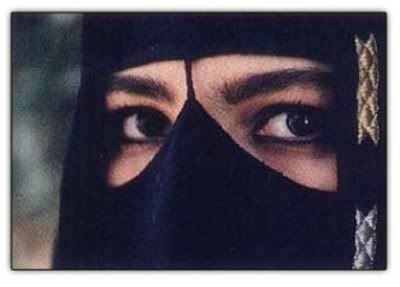
These marriages between older men and young women certainly merit concern. But, as when I am answering the Temple Recommend questions, my sympathies are aroused. As Latter-Day Saints, we pressure our 8-year-old children to enter an important covenant. I myself have indoctrinated my children to do this because of my firm belief in certain religious precepts. My stay in the country of Saudi Arabia has acquainted me with girls who have been pressured into arranged marriages to older men. Some of the girls I teach in the university are under 21 years of age and have children 4 and 5 years old. They proudly show me their children's pictures on their cell phones. This is a cultural practice I disagree with, but it is not unlike that practiced by the FLDS. Some of you who have visited my blog have taken issue with those who would "export our values and culture to places that already have their own."

As you read the rant of an anonymous FLDS member you can see how they feel about 137 of their small children being removed from their homes:
"You have been fed a steady diet of bull puckey for long enough, why don't you try something else, your taste buds would enjoy it I'm sure. A strong mind is one that thinks for itself, not believes every malcontent filthy liar and every bit of media spin. Nobody, and I mean nobody is being raped!! I promise you that the 6 month old babies aren't being raped. I know of one 14 year old marriage, but in general the girls are older than that, you can keep bringing that up for your purpose of sensationalism as long as you'd like, it still doesn't make it the truth. I also know that every person is given a choice or asked if they are willing, they are not forced into the marriages, and you can go ahead and give us your drivel about brainwashing all you want to, I know I've been there, I wasn't brain washed, I loved what I lived... I made a choice, I was asked and I made that choice, so you will say I was brainwashed. Hogwash. Free will and choice, and a beautiful choice at that, I would way rather be married to a wonderful man that has matured and mellowed, than a young know it all buck... The people of the United States are the ones who are brain washed, with all the TV, sports... Only the Lord God of Heaven has the right to judge us, you don't and I don't have the right to judge you. The United States of America is supposed to be where you can practice what you believe..."

What do you think? If you truly believed it would help her gain celestial glory, would you encourage your 15-year-old daughter to marry an older man? Did your LDS forebears do this very thing? What about our revered Prophets of the Latter days?

Labels: , , ,

Wednesday, April 02, 2008

How Julie Beck Introduced Me To Blogging


It was April 2, 2006 and I was listening to General Conference. Julie B. Beck, first counselor in the YW General Presidency was the token female speaker. She gave a talk titled An Outpouring of Blessings. It was the first I'd ever heard her speak. As I listened, I began to crawl out of my skin with frustration. Julie's thesis statement was that "through the blessings of the priesthood, we are all given equal partnership, gifts, and blessings." She developed this idea by saying that all faithful members are equally blessed by the priesthood. All babies, whether male or female, can be given a name and a blessing. Girls and boys both can be baptized. Women and men alike partake of the sacrament, receive priesthood blessings, patriarchal blessings, and the higher blessings of temple endowments. She went on and on in this vein and concluded that "through the infinite fairness and love of God, all men and women were given equal partnership, gifts, blessings, and potential."

What she carefully stepped around and never mentioned, was that MEN ARE THE ONES GIVING THESE PRIESTHOOD BLESSINGS. WOMEN ARE PROHIBITED FROM HOLDING THE PRIESTHOOD. What was with all the "equality" talk??

I continued to stew all that day and the next. I had to talk to someone about my feelings, but I knew no one in my Vernal ward would have the least clue of why the talk might be upsetting. I was aware that blogs and chat rooms and internet groups were out there, but I didn't know if I could find anyone discussing this particular subject. I googled around for a while but all I could discover was a small thread on Dave's Mormon Inquiry about the Priesthood Session. Not knowing what a threadjack was, I made my first ever comment. Bored in Vernal was born.

OK, a little embarrassing, it wasn't exactly the greatest place to find someone with whom to commiserate. (I never did find anyone to discuss that particular talk with me!) But I just thought all my readers would be interested to know that you have Julie Beck to thank for my presence here exactly two years and many posts and comments later!

Labels: , ,

Tuesday, April 01, 2008

Women Drivers in Saudi Arabia

This is not an April Fool's joke! No, readers, this is another one for Women's History Month.

Yesterday in the newspaper it was announced that women would have the privilege to drive in Saudi Arabia starting in 2 months. This is a major, major breakthrough for women in this country. It has come about through the support of women in the royal family. I was fascinated to read about the caveats associated with this change.
  • Women must remain veiled while driving. (Can you imagine driving in this??)
  • Women traffic policemen will be hired and trained, since it will remain against the law for men policemen to stop a woman.
  • Roadside assistance will be available. In order to provide this service, women must pay extra premiums.
  • Women will drive only between the hours of 8am and 8pm.

Still! This is great news. Rejoice with us.

Labels: ,

Tuesday, March 11, 2008

Making Women's History Today

cross-posted at Feminist Mormon Housewives

Young women who live in Saudi Arabia today are increasingly being exposed to the influence of the outside world. There are those who are sheltered from television, music, and the media, but most college-aged girls now own ipods, cell phones, and jeans. Many of these young women are pursuing their education to the university level at institutions which have opened up separate and close-to-equal college programs for females. These are the girls with whom I have had the pleasure of associating during my stay here in the Kingdom. When DH accepted a job at a university in Riyadh, I was fortunate to find employment with the same institution in their women’s college as a health and physical education instructor.

When I arrived here in August, I discovered that the program was dismal. In the public schools, physical education is strictly forbidden for girls, and in the private schools the PE programs are rudimentary. At the university level, the girls attended 4 semesters of HPE. The classes consisted of one hour per week of theory (health & nutrition, first aid, anatomy, and pregnancy & childbirth) and one hour of practical exercise. I was placed over the prac courses. At the time I arrived these were one hour of aerobic exercise given to classes of 30-40 girls in a small dance studio--without music. There I was, jumping up and down, trying to get these beautiful veiled princesses to put on pants, move around during their periods, and elevate the heart rate with no space and no beat other than me singing out, “1-2-3-4!” The first month I was there, I attempted to get approval for music with no success. I then focused my efforts on facilities.

I learned from the girls themselves that it was counterproductive to fight against the local culture. I must work within the system if I wanted to see change. In particular, our student body president is a young woman who believes that Arabic women can accomplish much within the limitations that are imposed. She began to work toward the possibility of a women’s basketball team. Our HPE faculty began to point out to our supervisors how much better the facilities were at other colleges. We were lagging behind those schools which had full gymnasiums for their women’s programs! Soon, we were given the use of 2 outdoor basketball courts formerly used by the men’s side. We had to wait until the courts were completely walled in so that the girls could not be seen while exercising. These courts were finished in January, and we quickly added basketball, volleyball, badminton and soccer to our program. The first day that we went out on the courts, one of the girls confessed to me that she had never in her life exercised out of doors.

Some of the young women at our university had received education in the US, in other countries, or in private schools, and were excited about the changes. Early in February, I read that the Arab News had published an article about the first-ever women’s football (soccer) match in Saudi Arabia. It was held Jan. 22, 2008 in Dammam between Prince Muhammad ibn Fahd University and the Al-Yamamah Women’s College of Riyadh. Though the match was open to women spectators only, the team members broke social expectations that women must be lady-like and demure at all times. I knew the time was right for our basketball team.

I am not a basketball coach, nor do I have much experience with the game. In my Nike Air Max I barely stand five feet tall. But our student body president collected more than 150 names of girls interested in coming out for our team. Someone had to step up. I am thankful that I live in the day of the internet so I was able to go online for rules, training techniques, fun drills and other aspects of coaching basketball. For weeks now, I’ve been dribbling a ball around and practicing my shooting so I won’t be too embarrassed in front of the girls. And I can now report that in this Women’s History Month of 2008 I am a little part of making history in this area of the world as our girls start their practices! We plan to compete with Al-Yamamah later in the semester. The interior design department is hard at work designing outfits for our team in which we will be able to move, yet which fit the stringent standards for women’s wear. Our games won’t be filmed by camera crews, and the spectators will be only a few of the mothers and sisters who wish us well. But to me, this semester in Riyadh has been as important as walking on the moon. One small step for womankind.

Labels: , , , , ,

Sunday, March 02, 2008

Utah Midwifery--Why You Should Care

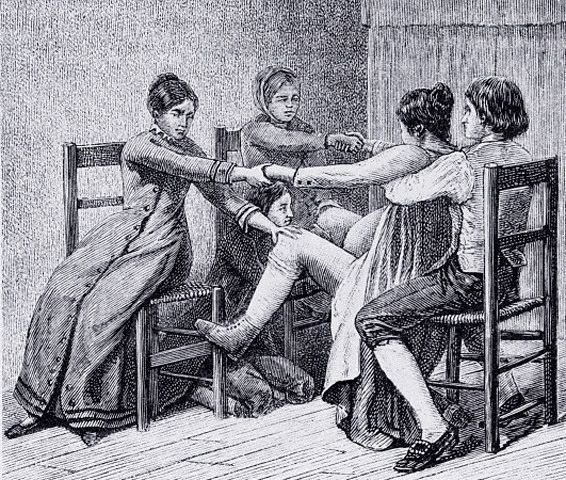
Utah has a long history of midwifery as a well-respected profession. In 19th century Utah, midwives not only delivered babies, but often cared for any health care concerns of the citizens, since physicians were scarce. Midwifery was a calling in the early LDS church, and leaders sent midwives "back east" for extensive training. Utah had the best midwives in the country because of that commitment.


When the Medical Practice Act was written and codified in Utah law, it was not intended to limit or even affect midwifery, because midwifery was clearly considered a separate profession. Over the years, the laws of the state began to change as there became a distinction between the "Certified Nurse Midwife," who had medical training and licensing, and the "Direct-Entry Midwife," or "Lay Midwife," whose training is done outside of the nursing field.

Here's a tidbit of which my blog friends are unaware: I personally have had midwives for three of my births, and home births for two of these. My first child was born in 1985 with a CNM at Orem Community Hospital, my third child was born in 1988 with a lay midwife at home in Provo, and my fifth child was born in 1991 with the same midwife at my home in Fayette, Missouri. This woman was a second-generation midwife and part of a group of trained and competent direct-entry midwives then active in the Utah Midwives Association.

Shortly thereafter, in 1993, a statute which once excluded midwifery from the practice of medicine was quietly removed. Many lay midwives were not even aware of the change until October of 2000 when Liz Camp, direct-entry midwife in St. George was charged with four felony counts of practicing medicine without a license. These charges centered on two basic offenses: 1) using Pitocin to stop a postpartum hemorrhage and 2) cutting an emergency episiotomy. She faced 20 years (5 year max penalty for each of 4 charges). She plea bargained down to 2 misdemeanor counts of practicing medicine without a license, and received 18 months probation and a $250 fine.

Because midwifery had now been found illegal in Utah, The Utah Midwives Association formed a Legislative Committee to address the issue. Along with other home birth supporters they created a bill that legally defined direct-entry (non-nurse) midwifery. This bill was furiously opposed by the Utah Medical Association and the Certified Nurse-Midwives, and it took several years and many concessions to enact. Finally, the Direct-Entry Midwife Act was passed on May 2, 2005. Under this bill, direct-entry midwives were allowed to practice, perform prenatal care and to legally administer some few life-saving medicines if they certified with the state to do so.

However, the opposition by the medical field to lay midwifery continues. Last year (2007), the UMA introduced a bill to amend the Direct-Entry Midwife Act. The bill did not pass, but was sent to an interim committee for further study. The interim committee did not choose to study it because the bill is unnecessary given the excellent outcomes for Licensed Direct-Entry Midwives (2006, 2007). These reports show that midwives practicing in Utah are very safe, and consistently produce better results than hospital providers. Now the UMA has brought forth its second legislative attempt to re-write the circumstances under which a direct-entry midwife (licensed or not) can practice.

This year’s version (SB 93) is sponsored by Sen. Margaret Dayton, a former labor and delivery nurse. She says that she and the Utah Medical Association want to stop midwives from attending "high-risk" pregnancies that could result in the harm or death of baby or mother. The bill includes a myriad of restrictions that would exclude a woman from the care of a direct-entry midwife. Some of the exclusions are valid and already addressed in rules approved by DOPL (HIV positive women, premature babies, etc.). Most of them, however, are not. In fact, over 90% of the women who currently choose the care of a direct-entry midwife would no longer be able to qualify as "normal." The bill goes beyond the definition of normal birth, and is clearly a restraint of trade.

In just one example, multiple gestations, line 226, are precluded. One midwife writes:
This one really steams me. When you look at home born twins vs. hospital born twins you find a very drastic difference in treatment and outcomes! Home born twins are commonly born at term–many even go a full 40 weeks or longer! Home born twins are generally larger–some are even 8 or 9 lbs. each! Home born twins are born vaginally. Hospital born twins are commonly born prematurely. Sometimes this happens spontaneously, other times mothers are induced or c-sectioned early, often without a clear medical indication. This results in premature babies that could have been born as healthy full-term infants. Hospital born twins are usually much smaller as well, and suffer the complications small and early babies are subject to. Given this information, I would not at all feel comfortable giving birth in a hospital with twins unless they came prematurely on their own.

Also affected in the exclusions are women who have had miscarriages, women who have had infections during pregnancy, women with diabetes, women over 35, and women who have had previous cesaerean births. Utah Midwives Association President Jules Johnston said Dayton has gone overboard. "If they sneeze, they're risked out." SB93 also removes one of the midwife positions on the state midwife board and adds three members who are either a licensed physician or certified nurse midwife. There is one member of the public on the board.

Elizabeth Smith, CPM, LDEM, is very concerned about how SB93 has been presented. She writes:
The Utah Medical Association has very sneakily and dishonestly proposed a bill to the Utah Senate, much like last year's bill, that will take away the rights of most mothers to birth at home. At the Senate committee, both sides were ordered to work out a compromise. The UMA met with midwife representatives and came up with compromises to everything except a few items. Yesterday, the UMedA sent their own bill, without the agreed compromises to the Senate floor saying that it was the "Compromise" bill. They totally lied and all but one Senator bought it and voted for it. Now the bill SB93 has gone to the house to be voted into law.

Women of Utah have become very heated on the issue. An anonymous commenter said:
"The bill Dayton is trying to amend took a very long time to come to. It was a miracle the groups involved could come to such compromises and articulate boundaries that all sides could agree to and support. This is becoming a war on an idea, a promotion of personal feelings rather than fostering freedom and providing appropriate healthcare. No one should be forced into care another feels comfortable with but they, themselves, are not. A family should be supported in birthing at home, in the hospital, or in a birthing center without fear of stigma. It's time for Mrs. Dayton to remove her hands from the wombs of all the women in Utah and allow them to birth the way their studies and conscience determine. Women have proven to do whatever it takes to acheive what they're looking for. Scaling down this already thin bill allowing for freedom of choice may well increase the likelihood of traumatic outcomes because women who abhor hospitals could move toward unassisted birth rather than submit themselves to the perceived emotional and physical raping of their rights that they may fear. It's time to leave well enough alone."

I believe that our LDS emphasis on the family requires us to care about this and similar issues. My research has convinced me that midwife assisted home birth is safer than hospital birth. In many countries, home birth is considered the first choice for healthy women. The countries with the lowest mortality and morbidity rates are those countries where midwifery is an integral part of maternity care and where homebirth is commonly practiced. The home birth debate has been carried out in many places. I am aware of many studies which indicate that home birth is safer than hospital birth and that fewer complications occur at home (see, for example, the Mehl study. Feel free to link to other studies in the comments to this post.) If this is indeed the case, shouldn't Utah women maintain the legal right to have access to this service? Our Utah lay midwives are well trained and knowledgeable. They attend and assist in many more births than CNM's when they are undertaking their training. I feel that legislation should support what they are doing and assist them to become even more qualified in their field of specialization. We should not set them back in their efforts. Because of the excellent outcomes obtained by Direct-Entry Midwives, this bill seeks to solve a problem that doesn't exist.

SB93 has now gone to the House and is now going through several substitutions. I will be watching this issue carefully to see how Utahns will respond.


*

Labels: , , ,

Tuesday, February 19, 2008

Evolution of Official Birth Control Teachings in the Mormon Church: From Depravity and Perversion to a Sacred Matter Between the Couple and God

It appears from comments received on my last post that some are unaware of the development of official policy of the Church regarding birth control. The purpose of this post is to clarify official teachings and to demonstrate that policy has filtered down variously in different local areas.

Since its inception in 1830, the LDS Church has maintained a positive stance toward the propogation of the human race. Due to its doctrine of premortal existence, members have been urged to welcome spirits to earth by providing them physical tabernacles. Married LDS couples today are counseled to desire children and to prayerfully decide how many they can provide for physically, emotionally, and financially. Thus, it is not always apparent that the rhetoric on having children today represents a large shift from previous policy.

Recent counsel to "decide" how many children to have presupposes that there is an accepted way to curtail the birth of children after the decided-upon number has been reached. Nowhere is it officially stated that birth control is approved. But this can be assumed by the counsel which recognizes choice in number of children. This tacit acceptance of birth control is a recent move which began tentatively in the late 1970's and did not gain momentum until the presidency of Gordon B. Hinckley.

The evidence of ancient contraceptive knowledge is impressive. A list of pre-19th century contraceptive methods include: withdrawal by the male; melting suppositories designed to form an impenetrable coating over the cervix; diaphragms, caps, or other devices inserted over the cervix and withdrawn after intercourse; intrauterine devices; douching after intercourse designed to kill or drive out the sperm; condoms; and varieties of the rhythm methods. None of these methods are new. Increased availability of mass-produced and medically sound methods of birth control was seen in the United States in the early 1800's. Modern condoms were produced in the U.S. beginning about 1830. The "womb veil," an early diaphragm, was widely used by 1860. Legislation concerning birth control began to be introduced in 1873 when Anthony Comstock pushed a bill through Congress which defined contraceptive information as obscene.

Birth control became a subject that Church leaders felt constrained to clarify, affecting as it did a doctrinal matter. I would like to emphasize that every president of the Church from Brigham Young to Spencer W. Kimball spoke strongly against birth control and unequivocally denounced the use of artificial means to stop children from coming to earth. Additionally, official statements under the auspices of the First Presidency were issued to reinforce the teaching. The following statements by the latter-day prophets are representative of their teachings on the subject:

Brigham Young
"There are multitudes of pure and holy spirits waiting to take tabernacles, now what is our duty? -- To prepare tabernacles for them; to take a course that will not tend to drive those spirits into the families of the wicked, where they will be trained in wickedness, debauchery, and every species of crime. It is the duty of every righteous man and woman to prepare tabernacles for all the spirits they can." (Brigham Young, Discourses of Brigham Young, p. 197.)

“To check the increase of our race has its advocates among the influential and powerful circles of society in our nation and in other nations. The same practice existed forty-five years ago, and various devices were used by married persons to prevent the expenses and responsibilities of a family of children, which they must have incurred had they suffered nature's laws to rule preeminent. That which was practiced then in fear and against reproving conscience, is now boldly trumpeted abroad as one of the best means of ameliorating the miseries and sorrows of humanity. Infanticide is very prevalent in our nation. It is a crime that comes within the purview of the law, and is therefore not so boldly practiced as is the other equally great crime, which, no doubt, to a great extent, prevents the necessity of infanticide. The unnatural style of living, the extensive use of narcotics, the attempts to destroy and dry up the fountains of life, are fast destroying the American element of the nation; it is passing away before the increase of the more healthy, robust, honest, and less sinful class of the people which are pouring into the country daily from the Old World. The wife of the servant man is the mother of eight or ten healthy children, while the wife of his master is the mother of one or two poor, sickly children, devoid of vitality and constitution, and, if daughters, unfit, in their turn, to be mothers, and the health and vitality which nature has denied them through the irregularities of their parents are not repaired in the least by their education.” (Brigham Young, Journal of Discourses, v. 12, pp. 120-121.)

John Taylor
"...parents are afraid to fulfill the first great law of God, "Be fruitful and multiply, and replenish the earth;" and by desperate circumstances are almost forced to the unnatural wish of not propagating their species; while, corrupted with a correspondent depravity with that which reigns among nations, they are found using suicidal measures to prevent an otherwise numerous progeny from increasing their father's misery, and inheriting his misfortunes." (John Taylor, The Government of God, Chapter 2.)

Wilford Woodruff
"As to the lesser sin of preventing conception, no general rule can be laid down, there are so many different circumstances distinguishing one case from another and such a difference in motives that each particular case has to be judged by itself and decided by the light of the Spirit. But we believe where persons sincerely repent and cease the practice, they should be permitted to enter the Church. This is not the unpardonable sin, and like other misdeeds, can be forgiven when penitence and reformation are shown." (Wilford Woodruff and Joseph F. Smith to Job Pingree, Jan. 23, 1894.)

Joseph F. Smith
“Those who have taken upon themselves the responsibility of wedded life should see to it that they do not abuse the course of nature; that they do not destroy the principle of life within them, nor violate any of the commandments of God. The command which he gave in the beginning to multiply and replenish the earth is still in force upon the children of men. Possibly no greater sin could be committed by the people who have embraced this gospel than to prevent or to destroy life in the manner indicated. We are born into the world that we may have life, and we live that we may have a fullness of joy, and if we will obtain a fullness of joy, we must obey the law of our creation and the law by which we may obtain the consummation of our righteous hopes and desires -- life eternal.” (Joseph F. Smith, Gospel Doctrine, p. 276.)

"I believe that where people undertake to curtail or prevent the birth of their children that they are going to reap the disappointment by and by. I have no hesitancy in saying it is one of the greatest crimes of this world today, this evil practice." (Joseph F. Smith, Gospel Doctrine, p. 278-279)

Heber J. Grant
“Another of the great evils of the age is race suicide. This also is not consistent with the gospel of Jesus Christ. Providing opportunity for the spirit children of our Father in Heaven to come to earth and work out their own salvation is one of our sacred privileges and obligations. We teach that among the choicest of eternal riches are children.” (Heber J. Grant, Gospel Standards, p. 154.)

George Albert Smith
"Children are a heritage from the Lord, and those who refuse the responsibility of bringing them into the world and caring for them are usually prompted by selfish motives, and the result is that they suffer the penalty of selfishness throughout eternity. There is no excuse for members of our Church adopting the custom of the world. . . We have been better taught than they." (George Albert Smith, "Birth Control," Relief Society Magazine, Feb. 1917, p. 72)

David O. McKay
“Any effort or desire on the part of a married couple to shirk the responsibility of parenthood reflects a condition of mind antagonistic to the best interests of the home, the state, and the nation. No doubt there are some worldly people who honestly limit the number of children and the family to two or three because of insufficient means to clothe and educate a large family as the parents would desire to do, but in nearly all such cases, the two or three children are no better provided for than two or three times that number would be. Such parents may be sincere, even if misguided; but in most cases the desire not to have children has its birth in vanity, passion, and selfishness. Such feelings are the seeds sown in early married life that produce a harvest of discord, suspicion, estrangement, and divorce. All such efforts, too, often tend to put the marriage relationship on a level with the panderer and the courtesan. They befoul the pure fountains of life with the slime of indulgence and sensuality. Such misguided couples are ever seeking but never finding the reality for which the heart is yearning.” (David O. McKay, Relief Society Magazine, v. 3, no. 7, July 1916)

Joseph Fielding Smith
“Those who attempt to pervert the ways of the Lord, and to prevent their offspring from coming into the world in obedience to this great command, are guilty of one of the most heinous crimes in the category. There is no promise of eternal salvation and exaltation for such as they, for by their acts they prove their unworthiness for exaltation and unfitness for a kingdom where the crowning glory is the continuation of the family union and eternal increase which have been promised to all those who obey the law of the Lord.

...it is only a matter of time before those who so strongly advocate and practice the pernicious doctrine of ‘birth control’ and the limiting of the number of children in the family, will have legislated themselves and their kind out of this mortal existence.” (Joseph Fielding Smith, Relief Society Magazine, v. 3, no. 7, July 1916.)

"Birth control is wickedness. The abuse of this holy covenant has been the primary cause for the downfall of nations. When the sacred vows of marriage are broken and the real purpose of marriage abused, as we find it so prevalent in the world today, then destruction is inevitable.

No nation can endure for any length of time, if the marriage covenants are abused and treated with contempt. The anger of the Almighty was kindled against ancient nations for their immorality. There is nothing that should be held in greater sacredness than this covenant by which the spirits of men are clothed with mortal tabernacles.

When a man and a woman are married and they agree, or covenant, to limit their offspring to two or three, and practice devices to accomplish this purpose, they are guilty of iniquity which eventually must be punished. Unfortunately this evil doctrine is being taught as a virtue by many people who consider themselves cultured and highly educated. It has even crept in among members of the Church and has been advocated in some of the classes within the Church.

It should be understood definitely that this kind of doctrine is not only not advocated by the authorities of the Church, but also is condemned by them as wickedness in the sight of the Lord." (Joseph Fielding Smith, Doctrines of Salvation, Vol. 2, Pg. 85-9

Harold B. Lee
“We declare it is a grievous sin before God to adopt restrictive measures in disobedience to God's divine command from the beginning of time to ‘multiply and replenish the earth.’ Surely those who project such measures to prevent life or to destroy life before or after birth will reap the whirlwind of God's retribution, for God will not be mocked.” (Harold B. Lee, Conference Report, October 1972, p. 63.)

Spencer W. Kimball
"I have told many groups of young people that they should not postpone their marriage until they have acquired all of their education ambitions. I have told tens of thousands of young folks that when they marry they should not wait for children until they have finished their schooling and financial desires. Marriage is basically for the family, and there should be no long delay. They should live together normally and let the children come. . ." (Spencer W. Kimball, "Marriage is Honorable," Speeches of the Year, 1973, p. 263)

"The tendency for many of our girls and many of our married women to put off or to reduce their families is not pleasing to your Heavenly Father, for He said, 'multiply and replenish the earth,' and He knew what He was doing, and any of our personal opinions don't amount to much as compared to the wisdom of God. And he said as he concluded this great effort of creation, 'And I . . .saw everything that I had made, and behold, all things which I had made were very good . . .' He stood off and looked them over. He had made no errors; He had made no mistakes; He had created man and woman for a purpose. That purpose was not fun; that purpose basically was to live together in harmony and peace and to rear children in righteousness . . ." (Spencer W. Kimball, Address to Special Interest Fireside in Tabernacle, 29 Dec. 1974, pp. 4-5)

Ezra Taft Benson
The world teaches birth control. Tragically, many of our sisters subscribe to its pills and practices when they could easily provide earthly tabernacles for more of our Father's children. We know that every spirit assigned to this earth will come, whether through us or someone else. There are couples in the Church who think they are getting along just fine with their limited families but who will someday suffer the pains of remorse when they meet the spirits that might have been part of their posterity.” (Ezra Taft Benson, Conference Report, April 1969, p. 12.)

"Young mothers and fathers, with all my heart I counsel you not to postpone having your children, being co-creators with our Father in Heaven. Do not use the reasoning of the world, such as, "We will wait until we can better afford having children, until we are more secure, until John has completed his education, until he has a better paying job, until we have a larger home, until we have obtained a few of the material conveniences," and on and on. This is the reasoning of the world and is not pleasing in the sight of God. Mothers who enjoy good health, have your children and have them early. And, husbands, always be considerate of your wives in the bearing of children. Do not curtail the number of children for personal or selfish reasons. Material possessions, social convenience, and so-called professional advantages are nothing compared to a righteous posterity. In the eternal perspective, children -- not possessions, not position, not prestige -- are our greatest jewels." ("To the Mothers in Zion," Parents' Fireside, Salt Lake City, Utah, 22 February 1987.)

“True to form, many of the people who desire to frustrate God's purposes of giving mortal tabernacles to His spirit children through worldwide birth control are the very same people who support the kinds of government that perpetuate famine. They advocate an evil to cure the results of the wickedness they support.” (Ezra Taft Benson, Teachings of Ezra Taft Benson, p. 539.)

Howard W. Hunter
“Honor your wife’s unique and divinely appointed role as a mother in Israel and her special capacity to bear and nurture children. We are under divine commandment to multiply and replenish the earth and to bring up our children and grandchildren in
light and truth (see Moses 2:28; D&C 93:40). You share, as a loving partner, the care of the children. Help her to manage and keep up your home. Help teach, train, and discipline your children” (Howard W. Hunter, Conference Report, Oct. 1994, 67; or Ensign, Nov. 1994, 50.)

The earlier statements of these latter-day prophets may have been somewhat euphemistic, but there was clearly no provision for a couple "prayerfully considering" how many children to have. These sentiments were echoed by many other Apostles and General Authorities, too numerous to list here.

There has always been a percentage of Church membership which has had difficulty with the absolute proscription of any kind of family planning. By the early 1900's, the issue of what to do when childbirth took a toll on the health of the mother was beginning to be discussed. Elder Orson F. Whitney of the Quorum of the Twelve wrote:

"The only legitimate 'birth control' is that which springs naturally from the observance of divine laws, and the use of procreative powers, not for pleasure primarily, but for race perpetuation and improvement. If this involves some self-denial on the part of the husband and father, so much the better for all concerned." (Orson F. Whitney, Relief Society Magazine 3, no. 7 (July 1916).)

In a similar statement, Joseph Fielding Smith announced that even in cases of sickness, "no prevention is legitimate except through absolute abstinence." (Joseph Fielding Smith, Improvement Era 11:959-61.)

There were several official statements which were circulated in the Church under the auspices of the First Presidency. One such statement appeared in the Relief Society Magazine in February of 1917 from the office of Joseph F. Smith, Anthon H. Lund, and Charles W. Penrose:

“Officers, members of the Relief Society, herein you have the word of the Lord, on this subject. Can anything be clearer or more emphatic? It is a very strange thing that people can believe that the Lord of Life could countenance for one moment, the refusal of his children to comply with the first commandment given to Adam and Eve. It is so easy to avoid parenthood, if people wish to do so, and that, too, innocently, even if selfishly. Men and women can remain unmarried. That is all there is to it.” (First Presidency {Joseph F. Smith, Anthon H. Lund, Charles W. Penrose}, Relief Society Magazine, v. 4, no. 2, February 1917, pp. 68-69.)

Despite these types of official Church statements, the feelings of Church members and local leaders varied from ward to ward and from stake to stake. Many members had made their own decisions about birth control. A 1935 poll of 1,159 BYU students showed that 89% believed in birth control in some form. Church leaders were aware of this and continued to warn members. In 1942 the official Church magazine, the Improvement Era, included an article entitled, "Should Birth Control Be Practiced?" In it, John A. Widtsoe made a strong case against artificial means of birth control. He warned of dire consequences accompanying the use of contraceptives:

"Since birth control roots in a species of selfishness, the spiritual life of the user of contraceptives is also weakened. Women seem to become more masculine in thought and action; men more callous and reserved; both husband and wife become more careless of each other." (John A. Widtsoe, Improvement Era, Dec 1942.)

Nonetheless, Widtsoe demonstrated an understanding that at times a mother's health might be a consideration for limiting family size. In exceptional cases he suggested, "careful recognition of the fertile and sterile periods of woman would prove effective in the great majority of cases. Recent knowledge of woman's physiology reveals the natural method for controlling birth."

When McConkie's Mormon Doctrine was published in 1958 the entry on birth control quoted from Joseph Fielding Smith, "Those who practice birth control...are running counter to the foreordained plan of the Almighty. They are in rebellion against God and are guilty of gross wickedness." (Bruce R. McConkie, Mormon Doctrine, first ed., 1958, p. 81.) For about 20 years, Mormon Doctrine remained one of the most authoritative sources most Mormons had on their bookshelves. But family size among active Latter-day Saints continued to shrink.

In 1979 a seminal article on the subject of birth control appeared in the Ensign magazine. The article was not written by a General Authority. It was composed by LDS doctor Homer Ellsworth, but its appearance in the Church's official magazine necessitated approval by Church authorities. In the article, Ellsworth gave his opinion that decisions regarding the number and spacing of children were to be made by husband and wife righteously and empathetically communicating together and seeking the inspiration of the Lord. He cited the then current counsel of the First Presidency in the General Handbook of Instructions and testified that he was inspired by this statement that "the health of the mother and the well-being of the family should be considered." The entire text of the First Presidency Statement Ellsworth referenced reads as follows:

“Presidents of Stakes, Bishops of Wards, and Presidents of Missions
Dear Brethren:
The First Presidency is being asked from time to time as to what the attitude of the Church is regarding birth control. In order that you may be informed on this subject and that you may be prepared to convey the proper information to the members of the Church under your jurisdiction, we have decided to give you the following statement:
We seriously should regret that there should exist a sentiment or feeling among any members of the Church to curtail the birth of their children. We have been commanded to multiply and replenish the earth that we may have joy and rejoicing in our posterity.

Where husband and wife enjoy health and vigor and are free from impurities that would be entailed upon their posterity, it is contrary to the teachings of the Church artificially to curtail or prevent the birth of children. We believe that those who practice birth control will reap disappointment by and by.
However, we feel that men must be considerate of their wives who bear the greater responsibility not only of bearing children, but of caring for them through childhood. To this end the mother's health and strength should be conserved and the husband's consideration for his wife is his first duty, and self control a dominant factor in all their relationships.

It is our further feeling that married couples should seek inspiration and wisdom from the Lord that they may exercise discretion in solving their marital problems, and that they may be permitted to rear their children in accordance with the teachings of the gospel.” (First Presidency {David O. McKay, Hugh B. Brown, N. Eldon Tanner}, The Church of Jesus Christ of Latter-day Saints, Office of the First Presidency, April 14, 1969.)

This letter has been called a "master of diplomacy." This is because the statement can and has been used to justify both sides of the birth control debate. Notice however, that it is made clear that artificial means of curtailing the birth of children is contrary to the Church's teachings, and that "self control" is advocated when considering the mother's health and strength to bear further children.

As can be seen in the comments to my last post, this Ensign article was hailed by members all over the Church as a signal that the Church position on birth control had relaxed. In fact, this was far from the case. Church president and prophet Ezra Taft Benson continued to make many strong statements against contraception throughout his ministry. But the tide could not be held back. Throughout the seventies and eighties, Stake Presidents and Bishops freely expressed varying views in private to their respective flocks. By the time President Gordon B. Hinckley took office, the Church's historical position regarding birth control had been largely forgotten. Since 1984, a subtle shift in rhetoric has allowed members to feel comfortable with their own prayerful decisions regarding family size:

Gordon B. Hinckley
"Of course we believe in children. The Lord has told us to multiply and replenish the earth that we might have joy in our posterity, and there is no greater joy than the joy that comes of happy children in good families. But he did not designate the number, nor has the Church. That is a sacred matter left to the couple and the Lord." (Gordon B. Hinckley, Cornerstones of a Happy Home, Satellite fireside broadcast, Jan 29, 1984, then distributed in the pamphlet of the same name)

Proclamation on the Family
The first commandment that God gave to Adam and Eve pertained to their potential for parenthood as husband and wife. We declare that God’s commandment for His children to multiply and replenish the earth remains in force. (Proclamation on the Family, Ensign, Nov 1995, 102.)

Church Handbook of Instructions
It is the privilege of married couples who are able to bear children to provide mortal bodies for the spirit children of God, whom they are then responsible to nurture and rear. The decision as to how many chldren to have and when to have them is extremely intimate and private and should be left between the couple and the Lord. Church members should not judge one another in this matter.

Married couples also should understand that sexual relations within marriage are divinely approved not only for the purpose of procreation, but also as a means of expressing love and strengthening emotional and spiritual bonds between husband and wife. (Church Handbook of Instructions, January 1999)

True To the Faith--a Church published booklet referencing a number of gospel principles:
When married couples are physically able, they have the privilege of providing mortal bodies for Heavenly Father’s spirit children. They play a part in the great plan of happiness, which permits God’s children to receive physical bodies and experience mortality.

If you are married, you and your spouse should discuss your sacred responsibility to bring children into the world and nurture them in righteousness. As you do so, consider the sanctity and meaning of life. Ponder the joy that comes when children are in the home. Consider the eternal blessings that come from having a good posterity. With a testimony of these principles, you and your spouse will be prepared to prayerfully decide how many children to have and when to have them. Such decisions are between the two of you and the Lord.

As you discuss this sacred matter, remember that sexual relations within marriage are divinely approved. While one purpose of these relations is to provide physical bodies for God’s children, another purpose is to express love for one another—to bind husband and wife together in loyalty, fidelity, consideration, and common purpose. (True to the Faith: A Gospel Reference, 2004, p. 26.)


Thus we see a subtle but important shift in the doctrinal teachings of the Church on the subject of birth control. Official statements by the Church continue to be careful in their wording. Unequivocal pronouncements such as "birth control may be used for the spacing of children" are absent from official sources, but may form counsel given by local leadership or members. At present, it is generally accepted that any Mormon couple, while encouraged to have children and create a family, may make their own inspired decisions in regards to contraception and family size.

Labels: , , , , ,

Saturday, February 09, 2008

Temple Initiatories from a Faithful Feminist Perspective

Today I am home alone (Yippee!) and instead of scrubbing the bathtub my mind is wandering in all kinds of strange directions.

I've been thinking about the temple initiatory for women and wishing I could discuss it from a faithful, feminist perspective. Unfortunately, there are some obstacles which stand in my way of doing this. Number one, of course, is the proscription from discussing certain sacred aspects of the temple. I'm a bit more liberal than many in talking of my temple experiences. I think there are certain parts in the temple which we are clearly told not to discuss, and I'm willing to draw the line there. But can we talk about the initiatory? Most Mormons won't talk about anything remotely associated with the temple. Even among other endowed members. So bringing up any of my wonderings on this subject with fellow Latter-day Saints will be met with resistance.

Next obstacle is my physical distance from the nearest Temple. The last time I attended was the day before we moved to the Middle East, and my next opportunity to go will probably be in June, when we go back to the States for Summer vacation. But even had I the chance to go to the temple, would I find someone with whom I could discuss my concerns while sitting around the Celestial Room?

The quiet, meditative setting of the Celestial Room is not always conducive to a robust investigation of the sort I am contemplating. I yearn to talk about the 2005 changes to the initiatory ordinance. I loved doing initiatories before the changes, and I found a lot of spirituality, intimacy, and symbolism have been removed. I'd like to talk about these things with a faithful LDS woman who misses this as well, but isn't about to lose her recommend over it. I'd like to find someone who isn't freaked out by the presence of large tubs of water in early SLC Temple ordinance rooms and the liberal pouring of consecrated oil from large horns over the crown of the head. But I'd want her to be feminist and knowledgeable enough to also discuss the differences between the male and female versions of the pre-2005 ordinance and their implications for feminists. We'd talk about the words "having authority," "under proper authority," and "now authorized." We'd discuss esoteric, mystical, symbolist, and romantic approaches to the initiatory. We'd speak of the importance of ritual and what, if any, priesthood is exercised by women ordinance workers.

Do you think I can hold out any hope for such a discussion? Must I always hold the sacred/secret deep within a cavern in my heart, never to see the light of day? Or do you think that Dan Wotherspoon might be able to arrange a Wednesday night Sunstone temple session, complete with discussion period in the upper Assembly room, as a special part of this year's Symposium?

I can always dream...or perhaps I should go scrub that bathroom now.

Labels: , , , ,

Thursday, February 07, 2008

The List

This year marks my 12th consecutive year of having daughters in the YW program, and I've become accustomed to having little lists lying around the house enumerating the qualities the girls would like to see in their future spouses. This ritual is a strange one which I think must be peculiar to the Latter-day Saints. I tend to view it as rather pernicious and dangerous. Perhaps its roots lie in good intentions. Indeed girls should be looking for young men to date who are following certain standards. I believe that communication should take place before young people get seriously involved so that a girl who wants 10 children doesn't end up married to a boy who doesn't want any. However, the lists I've taken out of pockets in the laundry tend to include items like "he should have blue eyes," "must be rich and have good taste in ties," or "will already have graduated from med school." Are my daughters simply being facetious in what they are writing on these lists? Or are they really culling from my future family possible brown-eyed son-in-laws?

What is the purpose of such a particular list? Should a girl who considers education important really refrain from dating a good LDS boy because he plans on becoming a mechanic rather than aspiring to a degree in medicine? What happens when she falls in love with a boy who doesn't meet every requirement on her list? Will she always feel in her heart that she lowered her standards to marry this individual? How will this girl react when (as happened in one of our Ward Standards Nights) a bright-eyed newlywed pulls a list out of her journal and gushes that the man she married fulfilled every requirement on her list?

Well, it must be that time of year again, for this week I found two lists written by each of my two teen-aged daughters. This list was a pre-printed one from some apocryphal YW materials entitled "A Future Husband" and which included several categories of inspection. The YW leader, in a burst of creativity, had the girls cross out the word "husband" and write in "wife." Apparently they were to decide what qualities they were to develop which would make them a worthy wife to the man they would someday marry. This seemed an improvement upon the standard, but upon perusal, I still became disturbed.

Following are the results of each list:


(14-year-old daughter)
A FUTURE HUSBAND WIFE:

Career Objective
  • Job to fall back on (lawyer?)
    Spiritual Preparation
  • Patriarchal Blessing
  • Temple Recommend
  • Mission
  • Caregiver
    Education
  • At least a college degree
  • Law Degree
  • Well Educated
    Special Skills
  • Know how to care for house and family
  • Have good work ethics
  • Selflessness
  • Good teacher
  • Kindness
    Talents/Hobbies/Interests
  • Piano player
  • Reading
  • Play sports
    Physical Traits
  • Appreciate my body
  • Good hygiene
  • Treat body like a temple

  • (16-year-old daughter)
    A FUTURE HUSBAND WIFE:

    Career Objective
  • Something to fall back on
    Spiritual Preparation
  • Worthy to go to Temple
  • R.M.


    Education
  • College graduate


    Special Skills
  • Good with kids
  • Trustworthy
  • Honest


    Talents/Hobbies/Interests


    Physical Traits
  • Healthy


  • This was all quite a surprise to me. First of all--my readers will know that BiV has never taught her children that a career is "something to fall back on." Why did both of my daughters use these same words? Is this something our YW are being taught in Church? Should women look upon a career as simply "something to fall back on?" Does my intelligent 14-year-old have a passion for law? Does her question mark indicate an awareness of its unsuitability as a backup career, or is she unsure if this choice of career will fit in with the Latter-day wife expectation?

    And my amazing, multi-talented 16-year-old wrote nothing down in the space provided for talents/hobbies/interests. Did she just get bored with the activity, or doesn't she think her talents or interests would be useful in her future role as wife?

    I'm especially interested to know if any of these responses would have changed if the purpose of the list had been to describe "MY FUTURE ASPIRATIONS" instead of "A FUTURE WIFE??"

    Labels: , , ,

    Saturday, February 02, 2008

    An Idle Princess in Paradise, or an Eccentric Camel?

    A Review of "Should Mormon Women Speak Out?" by Claudia Bushman, Dialogue: A Journal of Mormon Thought, vol. 41, No. 1. (This issue should be coming out very shortly. Keep checking the website.)

    Claudia Bushman is a Mormon woman who has been speaking out since the late 1960's when she and some friends living in Boston met monthly for a "consciousness-raising" group. These women became the founders of Exponent II and put together the "pink issue" of Dialogue--vol 6 no. 2, an issue devoted to women's concerns--in 1971.

    Speaking out by Mormon women has been met in a variety of ways by Church leadership since the 1960's. Some of the more publicized cases have tended to engender fear and reluctance to push the envelope. These cases influenced a generation of Mormon women, who were given the message that if their voice did not fit within strict parameters, they would be excluded.

    More likely, an LDS woman who is speaking out will simply be ignored. Russell Ballard has recognized this, and urged Stake and Ward leaders to allow women a greater role in Church councils.

    Claudia's article juxtaposes two sentiments: Eugene England, who opines that Mormon women writers are "more free, more daring, inventive, original in thought and unique in voice than Mormon men," and Susan B. Anthony's 1859 observation "why is it that all the pages of history glow with the names of illustrious men, while only here and there a lone woman appears, who, like the eccentric camel, marks the centuries?" Claudia comes to the conclusion: "Women do not speak out." Is her conclusion informed by the fears of the past when "women have spoken out and rued the day?" Or are women finding more of a voice in the Church today?

    My personal opinion is that women have more of a voice in the Church than ever before. We see women speaking to a worldwide Church in General Conference. Women are being hired in greater numbers at Church universities. And the internet is one of the frontiers where this is happening. When women of the Church disagreed with RS President Julie Beck's conference talk, the internet was a forum for them to voice their concerns. It was also a place for women who agreed with Beck's sentiments to make it known. Though a number of women signed their names to an expression of disagreement with her talk, there was no official recrimination or disciplinary action. Regardless, there are perhaps some areas of improvement still worth considering which Claudia mentions in her article.

    1. In the Church we tend to consider the basic unit the family rather than the individual, hearkening back to that old idea that the married man and woman were one, and that one was the husband.

    2. Does having a voice negate the essential nature of women? What is the authentic nature of women and what are we supposed to learn in our sojourn on the earth?

    3. Women used to have more opportunities to serve and develop their talents in Church work than they do now.

    4. Our male hierarchy sometimes treats grown women as children.

    In her article, Claudia proposes a practical program of action for Mormon women to encourage them to speak up and out. None of her suggestions are radical. I think that younger women will read the article and wonder what is the big deal. These women are already speaking out in their homes, their wards, and their stakes. Being more of Claudia's generation than many of the women on the internet, I relate to the fear she mentions. Experiences I've had in the past with male leaders are still very much a part of my life. These experiences, as well as the way women dissidents have historically been treated in the Church, make me hesitant to express my opinions in a Church setting.

    I'd love to have some feedback from Mormon women to see how they perceive the woman's voice is being heard in their areas. Please take a minute to answer these questions in the comment section:

    • Do you feel your leaders, especially male leaders, know you and relate to you from a position of respect rather than need?

    • Are women's views well represented in your ward and stake?

    • Are women presenting and carrying out their ideas?

    • Are women given an opportunity to persuade and convince, or are their ideas silenced and ignored?

    • Do you feel less respected in the Church than in your professional position?

    • Do you feel that your voice is heard in the Church as much as you would like it to be?

    • How many years have you been an adult (over 18) woman in the Church?


    Claudia points to Eve as an example of the direction LDS women today should take. Though she recommends a strong course of action, she also reveals a bit of her trepidation: "[Mother Eve] had to pay for what she did, but she did not remain an idle princess in paradise. She took action."

    Labels: , ,

    Tuesday, January 22, 2008

    Emma's Calling to Exhort and Expound

    By established tradition, Emma Smith has been held above reproach by the body of Latter-day Saints. It is acknowledged that she did not make the trek West after the death of her husband Joseph, but we all realize that she had some pretty compelling reasons for staying.

    • She was the primary caregiver for her aged mother-in-law, Lucy Mack Smith.
    • She felt the importance of preserving an inheritance for her five living children (one of whom was born five months after his father's death).
    • She had tensions with Brigham Young and concerns about the proper line of succession.
    • She remained unable to fully accept the principle of polygamy.
    • She desired to seek refuge from the unrelenting turmoil and trials of her life.

    Beside this, we paint Emma as the model of a prophet's faithful and dedicated wife.

    • She supported herself and her children by taking in boarders during Joseph's frequent absences.
    • She gathered supplies for the men of Zion's Camp.
    • She crossed the frozen Mississippi with two babes-in-arms and two toddlers, carrying the manuscript of the JST hidden in her clothing.
    • She cared for untold numbers of ill and homeless Saints as they migrated to Nauvoo.

    Sure, we hear intimations from time to time that Emma was not always compliant in accepting "sister-wives" into the family. But to our modern sensibilities--to our society today wherein plural marriage has been repudiated--Emma's difficulties with "The Principle" can almost seem virtuous.

    So it is with trepidation that I approach the topic of this post, which may seem critical of the First Lady of Mormonism. When we analyze D&C 25, we often dwell on the description of Emma as an "Elect Lady" (having received her Second Anointing), and the instructions given to her to prepare a collection of hymns. As we know, she fulfilled this assignment, working with W. W. Phelps to prepare the 1835 LDS Hymnal. In 1841 she expanded this early selection to 304 hymns in "A Collection of Sacred Hymns." In Section 25 we also see Emma directed to help Joseph with the translation of the Book of Mormon when scribes were not available. A BYU team was able to confirm that some of the original manuscript is in her handwriting.

    But we don't often discuss verses 7 and 8 where Emma is told, "And thou shalt be ordained under his [Joseph's] hand to expound scriptures, and to exhort the Church according as it shall be given thee by my Spirit." She was also told that her time should be devoted to "writing" and to "learning much." We have no record that an "ordination" took place at this time. I hesitate to interpret the "ordination" Emma was promised as a foreshadowing of her calling as General Relief Society President 12 years later. Perhaps as leader of this women's organization she did her share of exhortation--but this was to a limited number of sisters, not to the entire Church. And we see no evidence of any expounding of scripture. I am unaware of any writing that Emma did that can be construed to fulfill the admonition given her in Section 25.

    I believe that in verses 7 and 8 Emma Smith is being called as a "prophetess" in the Old Testament sense of the word. Not just as a prophet's wife, as in verse 5 and Isaiah 8:3, but as a female prophet as Miriam, Deborah, and Huldah. This use of the word prophesy placed the person who was called as a vicarious witness, or a spokes[wo]man for the Lord. How would the Church be different today if Emma had spoken in an authoritative voice to the members of the Church? What if we had even one scripture that she expounded by the Spirit?

    Despite my feminism, I love what the Lord tells Emma in verse 5. I don't believe it detracts from a woman's strength when she accepts the Lord's call to be a comfort and support to her husband in his afflictions. We see over and over in Church history how Emma was able to be a comfort to Joseph. I just find it sad that Emma spent so much time and effort in supporting her husband that she was never able to fulfill the glorious promises that the Lord had given her as an individual.


    1 Hearken unto the voice of the Lord your God, while I speak unto you, Emma Smith, my daughter; for verily I say unto you, all those who receive my gospel are sons and daughters in my kingdom.
    2 A revelation I give unto you concerning my will; and if thou art faithful and walk in the paths of virtue before me, I will preserve thy life, and thou shalt receive an inheritance in Zion.
    3 Behold, thy sins are forgiven thee, and thou art an elect lady, whom I have called.
    4 Murmur not because of the things which thou hast not seen, for they are withheld from thee and from the world, which is wisdom in me in a time to come.
    5 And the office of thy calling shall be for a comfort unto my servant, Joseph Smith, Jun., thy husband, in his afflictions, with consoling words, in the spirit of meekness.
    6 And thou shalt go with him at the time of his going, and be unto him for a scribe, while there is no one to be a scribe for him, that I may send my servant, Oliver Cowdery, whithersoever I will.
    7 And thou shalt be ordained under his hand to expound scriptures, and to exhort the church, according as it shall be given thee by my Spirit.
    8 For he shall lay his hands upon thee, and thou shalt receive the Holy Ghost, and thy time shall be given to writing, and to learning much.

    9 And thou needest not fear, for thy husband shall support thee in the church; for unto them is his calling, that all things might be revealed unto them, whatsoever I will, according to their faith.
    10 And verily I say unto thee that thou shalt lay aside the things of this world, and seek for the things of a better.
    11 And it shall be given thee, also, to make a selection of sacred hymns, as it shall be given thee, which is pleasing unto me, to be had in my church.
    12 For my soul delighteth in the song of the heart; yea, the song of the righteous is a prayer unto me, and it shall be answered with a blessing upon their heads.
    13 Wherefore, lift up thy heart and rejoice, and cleave unto the covenants which thou hast made.
    14 Continue in the spirit of meekness, and beware of pride. Let thy soul delight in thy husband, and the glory which shall come upon him.
    15 Keep my commandments continually, and a crown of righteousness thou shalt receive. And except thou do this, where I am you cannot come.
    16 And verily, verily, I say unto you, that this is my voice unto all. Amen. (D&C 25)

    Labels: , , ,

    Friday, January 18, 2008

    Women and Peace and Security

    In October of 2000 the Security Council of the United Nations adopted its landmark resolution 1325 on women, peace, and security. This resolution was an effort to protect the rights of women across the globe and remove barriers to their equal participation and full involvement in the maintenance and promotion of sustainable peace. Every year since 2000, this resolution has been reaffirmed. Three months ago, in October, an open debate was held to discuss progress on the implementation of this resolution. I recently became aware of this debate and the efforts that are being made to safeguard women around the world.

    This year the Council expressed their concern that armed conflicts persist in many parts of the world and are an ongoing reality affecting women. Specific acts of violence against women and girls continue to occur including killing, maiming, sexual violence, rape, exploitation and abuse. A statement by the Security Council reported:
    "such acts remain pervasive, and in some situations have become systematic, and have reached appalling levels of atrocity. The Council stresses the need to end impunity for such acts as part of a comprehensive approach to seeking peace, justice, truth and national reconciliation. In this context, the Council reiterates paragraph 9 of resolution 1325 (2000) and calls on all parties to armed conflict to respect fully international law applicable to the rights and protection of women and girls, especially as civilians."

    As part of the effort to stop atrocities committed against women during war, the Council recommended that women be made a more vital part of formal peace process. I believe it would be extremely beneficial to have women more involved in peace talks, and providing gender perspective during the making of policies and programs promoting peace in their various countries. Women continue to be underrepresented despite the U.N.'s efforts toward this goal.


    The obstacles women in many countries face result from shattered economies and social structures, lack of rule of law, poverty, limited access to education and other resources, and various forms of discrimination and stereotypes. My native country is one in which women's rights have been a priority for many years. We haven't been held back significantly by the above obstacles. However, I knew nothing about this initiative which has been an ongoing effort for seven years! Why isn't the U.S. promoting this resolution in a major way?

    Perhaps the atrocities of war regarding women are so far removed from us that we do not realize their seriousness? Maybe we feel these acts are not the fault of our soldiers? Do we think that American women are already adequately represented in forming policies and procedures regarding peace initiatives?

    As a U.N. member nation, have we fully participated in the Women and Peace and Security Resolution? (Read more about it here!)

    Labels: , ,

    Wednesday, January 16, 2008

    Jesus Loves Me, But Not My Breasts?

    This comment at FMH brought on a slew of unwelcome emotions:

    "As to the question of modesty, I would just ask women for some basics: I don’t want to see your boobs, and I don’t want to be overly reminded of them. I know you have them, and I know you can’t make them disappear, but you also know how to make them more or less noticeable. Please, choose things on the “less noticeable” side of the scale. Similarly, skirt-lengths that don’t give me reason to think I might catch something if I pay close enough attention are nicer than not."

    I have often deplored the treatment of modesty for women in our Church. Women and YW are oft castigated for wearing clothing that might titillate a man. Girls are faulted for inappropriate thoughts experienced by SS teachers, and are held accountable for men's reactions to their appearance.

    This emphasis is unwelcome for many reasons. First, a man is accountable for his own responses. We realize that men have sexual reactions to visual stimuli. But since a man is likely to get turned on by the sight of a shapely woman in jeans and a turtleneck sweater, or even a woman's eyes flashing through a burka, he must learn how he will deal with these completely natural feelings. We have seen that it is not impossible for a man to enjoy the sight of a beautiful woman, relax and turn his mind to other things, then go on with his life. He need neither feel guilty for his reflexes, dwell on inappropriate thoughts or take them into action, nor blame the woman who happened by or her choice of clothing.

    In many countries outside of the U.S., women breastfeed their children in public. Men are taught from a young age that this is natural and normal. When a breast appears in public, it doesn't seem to throw these men into a tizzy. Thus, it must be possible for males to learn how to process the sight of women's body parts.

    So-called "modesty" teachings are also unwelcome in the Church because they undermine the principles of the Gospel. The Lord would have his children know that they are valued, precious, and loved. Why do you think our youth have such difficulty believing these teachings? When carried to an extreme, as they now are, teachings on "modesty" undermine and confuse this Gospel truth. Young people get the message that their body parts are shameful and disgusting. "Modesty" teachings are so often emphasized that they replace instruction on God, Christ and the atonement, the Restoration, and Christian love. This leads youth (and others!) to excessive dieting, eating disorders, cutting, and depression.

    Comments such as Blain's are all to frequent in Mormon culture, among both women and men. I may be more fragile than most Mormon women, but these words have the effect on me of wanting to either flaunt my body or hide it and hurt myself. They make the possession of a woman's body an undesirable condition. "I know you can't make those breasts go away, but I wish you would," these voices say. "Make them less obvious if you can. Better yet, just disappear."

    At times I am admonished to choose my dress as if I would be in the company of Jesus. In reality, we should feel perfectly comfortable stark naked in the presence of the Savior. If we don't, there is something wrong with the way we have been taught to view our bodies. In the Garden before the Fall, man and woman were unclothed in the presence of God, Jesus, and perhaps the entire Heavenly Host, and they "were not ashamed!" God fashioned our body parts and is intimately acquainted with them.

    We are making the clothing issue for women a bit of an obsession. I agree with C.S. Lewis that "I do not think that a very strict or fussy standard of propriety is any proof of chastity or any help to it." In Mere Christianity he writes on the Christian view of sex and sexuality. He says that sex is an appetite, and like all appetites, it should be fed in healthy ways but not titillated, not indulged, not gorged. One sign that our sexual appetites are totally out of bounds is the growing phenomenon -- Lewis was writing in the 1940s -- of striptease shows. He wrote:
    "Now suppose you came to a country where you could fill a theater by simply bringing a covered plate onto the stage and then slowly lifting the cover so as to let everyone see, just before the lights went out, that it contained a mutton chop or bit of bacon, would not you think that in that country something had gone wrong in the appetite of food? ...There is nothing to be ashamed of in enjoying your food: there would be everything to be ashamed of if half the world made food the main interest of their lives and spent their time looking at pictures of food and dribbling and smacking their lips."

    I would not like my remarks to be construed as a defense of ostentatious flaunting of the body or of the degradation that takes place in pornography. Both are extremes which are as contorted as an overemphasis on covering up. In this fallen, cold and inhospitable world, clothing is a necessity. It is a gift given to mankind for their protection and comfort. Some concluding thoughts by C.S. Lewis:
    "Finally, though I have had to speak at some length about sex, I want to make it as clear as I possibly can that the centre of Christian morality is not here...All the worst pleasures are purely spiritual: the pleasure of putting other people in the wrong, of bossing and patronising and spoiling sport, and back-biting; the pleasures of power, of hatred. For there are two things inside me, competing with the human self which I must try to become. They are the Animal self, and the Diabolical self. The Diabolical self is the worse of the two. That is why a cold, self-righteous prig who goes regularly to church may be far nearer to hell than a prostitute. But, of course, it is better to be neither."

    Labels: , , ,

    Saturday, January 12, 2008

    Feminist Musings on the Story of Jephthah


    Whenever I come across an odd story in the Old Testament, I feel compelled pull it apart and try to make some sense out of it. Why is it there? Does it have some symbolic meaning of which we are unaware? Are we misinterpreting crucial aspects? Would it make more sense within the cultural milieu? Such is the story of Jephthah, one of the Biblical judges.

    This strange little story begins with an "unlikely hero," Jephthah, the son of a prostitute. He was taken into his father's family and raised there, but after the death of his father the legitimate children forced him to leave. He made some reputation for himself among a band of "vain men," so that when his countrymen needed help against the Ammonites, they came to him. Jephthah agreed to captain an army against Ammon, in return for being named their titular head. His first military action was an attempt to negotiate with the enemy. When that did not work, he gathered together the men of Israel. The Spirit of the Lord came upon Jephthah, and he went forth to battle, making a interesting vow to the Lord. If the Lord would help him win the battle, he would dedicate to the Lord and offer up for a burnt offering whatever should come forth from the doors of his house to meet him when he returned.

    After a successful conquest, Jephthah returned home and was greeted by his daughter, his only child. That she was a precious and only child is pointed up by the fact that the judges immediately before and after him were Jair (who had thirty sons who rode on thirty ass colts), and Ibzan (who had thirty sons and thirty daughters). The number of children is the only fact we are told about these two judges, making it very likely that they are there solely for the reason of emphasizing Jephthah' only begotten child. But she was a female.

    Not only was human sacrifice forbidden by the Lord, (Deut. 18:10), but burnt offerings were to be firstborn males (Lev. 1:3). Nevertheless, Jephthah had made a vow, and intended to keep it. His daughter acquiesced, asking only for two months time to go up to the mountains with some friends and "bewail her virginity." At the end of the two months, she returned to her father, and he "did with her according to his vow which he had vowed, and she knew no man." Thereafter it became a custom for the daughters of Israel to go up four days in a year to lament the fate of the daughter of Jephthah.

    The tradition of Biblical scholars is to interpret this vow of Jephthah's as an impetuous and evil action which had disastrous consequences. That Latter-day Saints have followed in this tradition is clear from the chapter heading of Judges 11: "He makes a rash vow which leads to sacrifice of his only daughter."

    This interpretation is problematic for at least two reasons. First, if this was a "rash vow," why would the Lord be given credit for bringing about the victory of Jephthah's army? In the Book of Judges, the people are punished with captivity and defeat when they forsake the Lord. Second, why would Jephthah make such a vow? Did he think perhaps an animal would be the first out the door to greet him? (In ancient Israel the animals were sometimes kept in the house.) What if the animal was an unclean one, such as a dog? To offer up such a sacrifice would be a great affront. But perhaps the greatest problem Biblical scholars face in the exegesis of this passage is the inclusion of Jephthah in Hebrews 11--the "faith chapter." Here Jephthah is included along with the great heroes of the Old Testament in obtaining "a good report through faith."

    I rather favor an interpretation that became popular in medieval times--that Jephthah was promising only to dedicate his daughter to the Lord and not to kill her. This would parallel Jephthah's daughter more to Samson and to Samuel than to Abraham's sacrifice of Isaac. But it would preserve the Messianic shadowing. Several points make this interpretation possible:

    1. The Hebrew "vav" usually translated "and" may also be translated as "or" rendering the reading in Judges 11:31: "whatsoever cometh forth...to meet me...shall surely be the Lord's, or I will offer it up as a burnt offering." Thus Jephthah's method of sacrifice would depend upon what came forth out of his door.
    2. The daughter departed into the mountains to "bewail her virginity," not her death. It is possible that she was being offered to some type of temple service which would necessitate her remaining unwed for the rest of her life. Note verse 39 which says that Jephthah kept "his vow which he had vowed: and she knew no man." This last clause would seem awkward and unnecessary if she were being put to death.
    3. Certain Hebrew scholars believe that for as long as she lived, the virgins of Israel went at different times, each for four days in the year, to provide comfort and encouragement to the daughter of Jephthah at the tent of meeting. This custom must have ended at her death, since there is no further reference to it in scripture or Jewish history.


    You see that it is possible to fit this story quite nicely into our Latter-day Saint canon. Faithful Jephthah makes a promise to the Lord, and keeps his promise. Faithful Jephthah's daughter yields herself to her father's vow and becomes a type of Christ. The story doesn't fit quite so nicely into feminist thought, however...or does it? What was the name of this intriguing daughter? What was she like? Didn't she deserve to make her own decisions? Why must her life be subject to her father's vow?

    Here's the other side of the question: if Samuel and Isaac were obedient to the vows of their parents, isn't it equal treatment for a young woman in the scriptures to show the same dedication? Is submission not a principle that Christ modeled, and which males and females must all learn?

    In my search for spiritual submission, is it helpful to have a female role model? Or would this simply reinforce unrighteous patriarchal domination which tends to crop up in religious settings? Can it be possible to spin this story into a celebration of a strong woman character who makes her own decisions and chooses on her own to follow the Lord? And what of my own life? Is it conceivable to view the submission I have promised in the temple as a glorious principle even though the submission my husband covenants is to God, and mine is to a mere mortal? Is the surrender I give freely in this holy place simply that required of all Christian disciples? Or does God require of women an additional offering? Does Jephthah's daughter hold the key? Am I to become a daughter on the pyre?


    I'm still wondering.

    Labels: , ,

    Thursday, January 10, 2008

    Lament of the Lost Judges


    This week in Seminary I am teaching the Book of Judges. As is customary in our OT year, the students are asked to read selected chapters from the books we are studying. The chapters they read in Judges are: 2, 3, 6, 7, 8, 13, 14, 15, 16. Does anyone see a problem with this selection? Out of 13 judges in Israel there are 6 of whom we have a substantial(?) account. Our Seminary chapters cover Othniel, Ehud, Gideon, and Samson, but leave out Deborah and Jephthah.

    I was annoyed, but somehow not surprised to see that Deborah was basically ignored in the lesson materials. After many hours of studying the account of Jephthah, I must also include this story in my "Lament of the Lost Judges."

    The stories of Deborah and Jephthah are problematic for LDS teachers. The student manual skims over Deborah by noting:
    Judges 4–5 tells about how Israel was delivered from the bondage of their enemies under the direction of a woman named Deborah, who was both a judge and a prophetess. She prophesied that a woman would destroy the enemy’s leaders. The prophecy was fulfilled when a non-Israelite woman named Jael killed the leader of the enemy army. The people learned that if they trusted the Lord, He could deliver them. Judges 5 contains the words of a song the Israelites sang about this important event. Music can be a powerful way of praising God (see also D&C 25:12).

    A sidebar in the Student Manual also includes a list of judges in which Deborah and her military commander, Barak, are listed together, erroneously creating the impression that they were some sort of co-judges. The teachers manual merely suggests: "Assign students to report on the following leaders and describe how they were unlikely heroes: Ehud, Deborah, Jael, Gideon, Jephthah." Thus, the Seminary manual allows perhaps 2-5 minutes for a student presentation on Deborah and Jephthah and no commentary whatsoever for the teacher. Compare this with a section suggested to last 15-20 minutes on the fact that Samson's parents were childless. Here the manual departs radically from the Old Testament text and preaches that the plan of happiness would be affected if Satan could influence people to stop having children.

    This dearth of information leaves the LDS teacher of youth with little instruction on how to present these fascinating Biblical judges, both of whom are of especial interest to women. Most will choose to simply pass over them. Considering the prominence of these stories in the scriptural record, it would be helpful if LDS lesson materials would deal with some of the following issues:

    Deborah

    • What is the Old Testament definition of a prophet and a prophetess? How does this differ and fit in with our understanding of modern prophets?

    • In what way did a woman judge add to our understanding of the period of Biblical judges?

    • What special abilities did Deborah bring to her ministry?

    • Why was Deborah's authority over a military commander and her authority to provide judgment in the people's affairs unusual for her day? How did she attain such prominence?

    • In what ways were Deborah and Jael (the other important woman in the story) called of God and in what ways did they simply step up to fulfill a need that they saw?

    • What importance does the Song of Deborah have in the scriptural record?

    • How is Deborah a role model for both men and women?

    • What types of Christ do we see in Deborah's story?


    I would like to ask my readers if they have heard the story of Deborah taught in an LDS setting, and if so, what was taught and how was it done? I plan to cover the story of Jephthah in greater depth, so I am saving it for my next post.


    'Deborah Under The Palm Tree', Adriene Cruz

    Labels: , , , ,